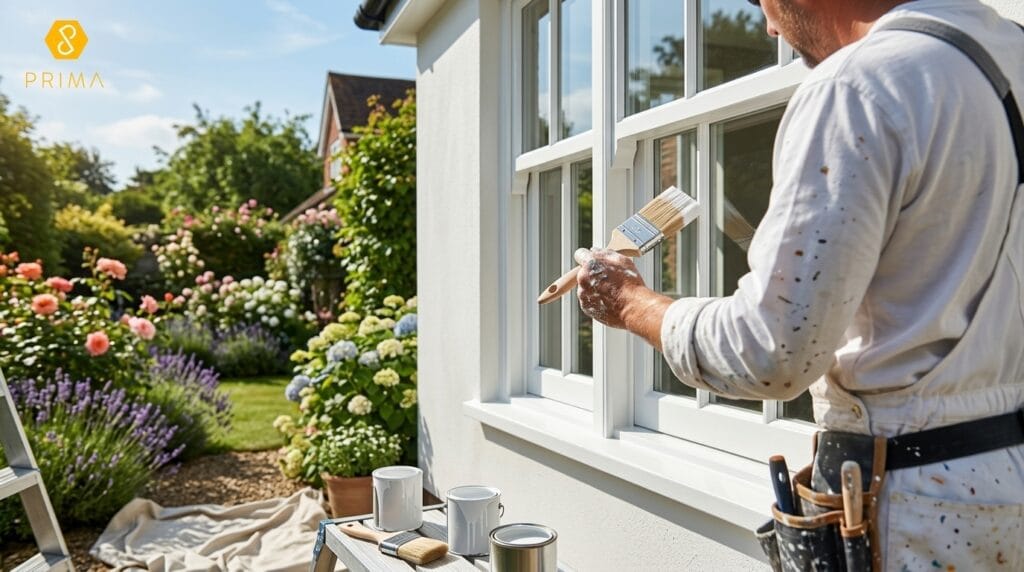
Every time London gets a proper run of hot, dry days, the phone starts ringing with people wanting exterior work done while the sun’s out. Fair enough, it feels like the obvious time. But a genuine heatwave is one of the trickier windows to paint an exterior well, not the easiest, and it’s worth knowing why before you book anyone in during a hot spell.
Paint doesn’t just dry, it cures, and that process needs a bit of time to happen properly. On a wall in direct summer sun, especially a south or west-facing elevation common on a lot of London’s terraces and semis, the surface can skin over within minutes while the paint underneath is still wet. That trapped layer is what causes bubbling and early flaking, sometimes only a few months after the job’s finished and looking perfect on the day. It’s a bit of a trap, because a hot, dry week feels like exactly the right conditions, when actually it’s the surface temperature of the wall, not just the air temperature, that matters most.
This doesn’t mean a hot spell is off the table, it just means the approach needs to change. Painters working through a heatwave will usually start at first light and follow the shade around the building, doing the east-facing wall early morning and moving to whichever elevation isn’t baking by midday. Anything in direct afternoon sun during a proper hot stretch gets left until the temperature drops in early evening, or pushed to a cooler day later in the week if one’s forecast. It’s slower going than a straightforward one-pass job, but it’s the difference between paint that lasts and paint that needs redoing within a year.
Spraying has its own complications in this kind of weather. The finish goes on thinner than a brushed coat, which means it’s even more exposed to flash drying in direct heat, and the paint itself can start to tack up in the gun faster than usual, which affects the finish if a spray team isn’t adjusting for it. Calm, slightly cooler mornings, even within a hot week, tend to give spray painting services in London the best results, which is why a lot of exterior spray work gets scheduled for early starts rather than the middle of the day.
If you’ve already got exterior painting booked in for a hot period, it’s worth asking your contractor how they’re planning around the forecast rather than assuming it’ll just go ahead regardless. A decent painter should be comfortable telling you if a particular day is too hot for a specific wall and suggesting an early start or a different day instead. It’s a small conversation, but it’s the one that decides whether the finish holds up past the first winter.
A lot of London’s period housing stock, particularly Victorian and Edwardian terraces, has solid brick walls that heat up and hold that heat differently to newer cavity-wall builds. A solid wall that’s been in full sun all afternoon can stay noticeably warm well into the evening, which changes the window for when it’s actually safe to paint. On older properties especially, touching the wall before starting is a better guide than the weather app on your phone.
If you’re not sure whether a hot stretch of weather is the right time to go ahead, the honest answer is that it depends on the specific wall, its orientation, and how long the heat is forecast to last. A proper exterior painting London assessment should take all of that into account rather than just booking the next available slot regardless of the forecast.
If you’re thinking about getting your exterior painted during a warm spell, get in touch with Prima Decor and we’ll give you a straight answer on whether the current weather is workable or whether it’s worth waiting a few days for things to settle.
Not necessarily, but a heatwave changes how the work needs to be scheduled. Painting in direct midday sun during a hot spell increases the risk of the surface drying too fast, so early morning starts and working around shade are the usual solution.
Yes, generally. Sprayed coats are thinner and more exposed to flash drying in direct heat, and paint can tack up faster in the equipment itself. Cooler mornings tend to give better results for spray work during a hot spell.
Solid brick walls common in Victorian and Edwardian terraces absorb and hold heat differently to modern cavity walls, sometimes staying warm well after the air temperature has dropped. Checking the wall itself, not just the forecast, gives a more accurate picture of whether it’s ready to paint.
Not always, but it’s worth asking your painter how they plan to work around the heat, such as starting early or following the shade around the building. A contractor unwilling to adjust the schedule for extreme heat is worth questioning.
Please select from below to see more:
Discover how we can help you with your decorating requirements. Call us on 020 8226 5125 or fill out our online request form and we will be in touch shortly.