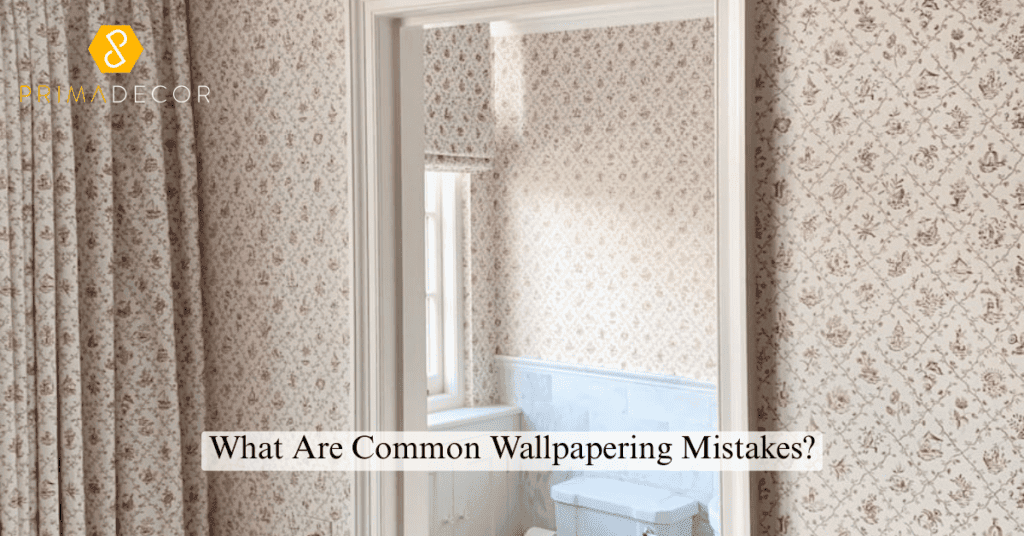
When done correctly, wallpapering can transform a room quickly and dramatically. In practice, what seems simple in theory can be frustrating. Homeowners often discover that wallpapering requires precision, patience and a specific technique that is difficult to achieve with amateur efforts. Understanding what are common wallpapering mistakes can help you to avoid costly remedial work or disappointing results.
The guide examines common mistakes people make when hanging wallpaper. It explains how they occur and shows professional methods to prevent them. Knowing what could go wrong is important when evaluating contractors or DIY projects.
Papering over wallpaper without proper preparation is the most common error. It is a quick and easy way to save both time and energy. It creates issues that appear within weeks or even months and require a complete removal of the system.
The fresh paste activates the adhesive under the old layer when you apply new wallpaper over the old. The old wallpaper will bubble and loosen. The weight of the two layers increases wall stress, leading to sagging, peeling, and buckling, especially at corners and seams.
Wallpaper that is already installed rarely lies perfectly flat. The new paper can show bubbles, raised edges or textured surfaces. This creates visible imperfections and ruins the finished product. Old patterns can show up in newer, lighter designs, creating an unattractive shadow effect.
Before hanging any new wallpaper, professional decorators strip the walls down to their bare plaster. It takes a little longer at first, but it ensures that the base is smooth and stable. This allows for new wallpaper to stick properly.
Wallpapering is a very visual art. The difference between amateur and professional work can be seen in the pattern matching. The error of patterns not aligning at the joins is obvious and cannot be ignored. To achieve perfect alignment, you need to develop skills through practice.
People tend to underestimate the measurements of pattern repetition. The wallpaper specifications specify the repeat distances. However, to apply this information accurately during cutting and hanging, it requires method and concentration. When you rush, the drops will be misaligned and cannot be fixed once the paste has been applied.
Starting position matters enormously. If you start in the wrong spot, pattern issues will only get worse as you move around the room. When you get back to your starting point, the patterns could be horribly misaligned. This may force compromises or removal.
Before cutting paper, the professional wallpaper decorator team plans the pattern placement. The team will identify the best starting point, which is usually the focal wall or the chimney breast. They then work systematically to ensure the patterns are arranged correctly throughout the room.
Wallpaper failures are more common than most people realise. The wrong type of paste, incorrect mixing, or inconsistent application can lead to lose seams and lifting edges.
Adhesives for different wallpaper types are required. Vinyl wallpaper requires vinyl paste. Heavy papers demand strong adhesives, while delicate papers call for gentle paste formulations. Using general-purpose paste on all surfaces can cause problems, especially with wall coverings.
It takes some practise to get the right consistency. If it is too thick, the paste will not cover properly, creating lumps. It will not hold if it is too thin. Adding water, the wrong way can lead to inconsistent batches.
The application technique can also influence the results. The paste must reach the edge of the drop and completely cover it. Rushing the application can leave dry spots where the paper does not adhere. Decorators who are experienced apply the paste methodically to ensure complete, even coverage.
Inadequate measurement leads to two issues: waste materials and inadequate coverage. Planning is the only way to avoid costly, frustrating problems.
Most people only measure the wall once and then cut each drop to the same size. Most properties have different ceiling and floor heights. By cutting drops based on the actual measurement for each location, you can avoid waste.
Pattern repeats complicate calculations. If a room measures 12 metres around, it might require eight drops of plain paper and 10 drops of patterned paper that has a repeat of 64cm. If you don’t account for the pattern repeat, you may end up with insufficient paper. You may need to order additional batches that do not perfectly match if they come from different batches.
Professional wallpaper installers near me always measure their work carefully and add allowances to allow for pattern matching and trimming. They also order a little extra in case there is a mistake or damage. The systematic method prevents delays caused by material shortages.
The longevity of your wallpaper is decided long before the first roll is unpacked. While it’s tempting to view wallpaper as a way to mask wall imperfections, the reality is the opposite: wallpaper acts as a spotlight, not a hideaway. Any underlying flaw such as a stray grain of sand, a hairline crack, or a shallow dent, will be magnified once the paper cures.
Proper adhesion requires a surface that is surgically clean; grease, dust, or lingering dampness are the primary culprits behind peeling and mould growth. To ensure a professional finish, the ‘prep’ phase is non-negotiable. This means filling every crack, sanding surfaces until they are glass-smooth, and applying a layer of sizing to ensure the paste grips the wall, rather than disappearing into porous plaster.
The standard for professional wallpapering services is thorough surface preparation. It takes some time, but it creates a foundation that will last for years and look professional.
Our wallpapering company London team at Prima Decor avoids common mistakes through diligent preparation and techniques developed over years of experience. Before any wallpaper can be applied, each project must begin with thorough wall preparation. This includes sanding, filling, and sizing before removing old wallpaper.
We give pattern matching special attention and we ensure that our decorators carefully plan the layout, select optimal starting points and following a methodical approach to align patterns perfectly across the entire room. The systematic method eliminates amateur errors caused by guesswork.
The selection of adhesives and materials is based on years of expertise with various wallpaper types and conditions. To ensure quality adhesion, we use pastes that are mixed correctly and applied uniformly.
A precise measuring system and accurate cutting will prevent waste while ensuring adequate coverage. Professional installation techniques, such as trimming, rolling seams, and finishing, produce flawless results.
It is more cost-effective to hire a professional for wallpaper installation if you want the job done right the first time. When all factors are considered, there is a minimal cost difference between DIY results that require repair work and professionally installed wallpaper that will last for years.
Consult Prima Decor for wallpapering services and discuss your project. Experienced decorators will help you avoid wallpapering errors while delivering professional results.
Please select from below to see more:
Discover how we can help you with your decorating requirements. Call us on 020 8226 5125 or fill out our online request form and we will be in touch shortly.